European Travel Commission, 2016 to 2025
Visit Europe Portal
A long-term technical partnership that helped Visit Europe grow into a multilingual destination platform serving travellers and tourism stakeholders across Europe.
Project Overview
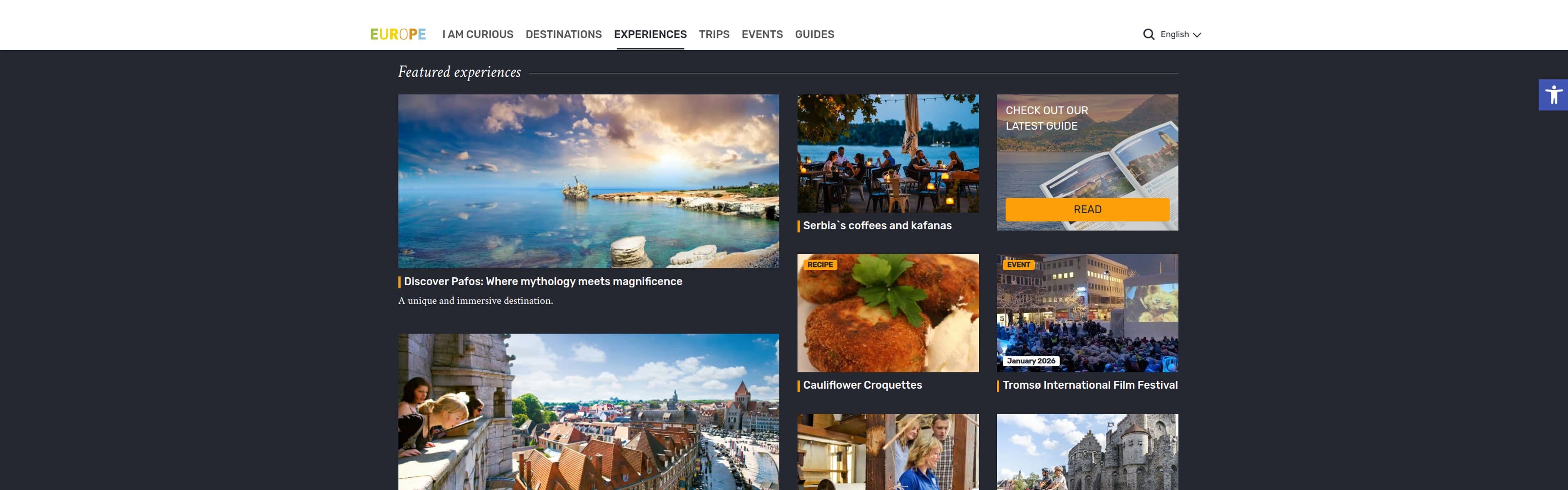
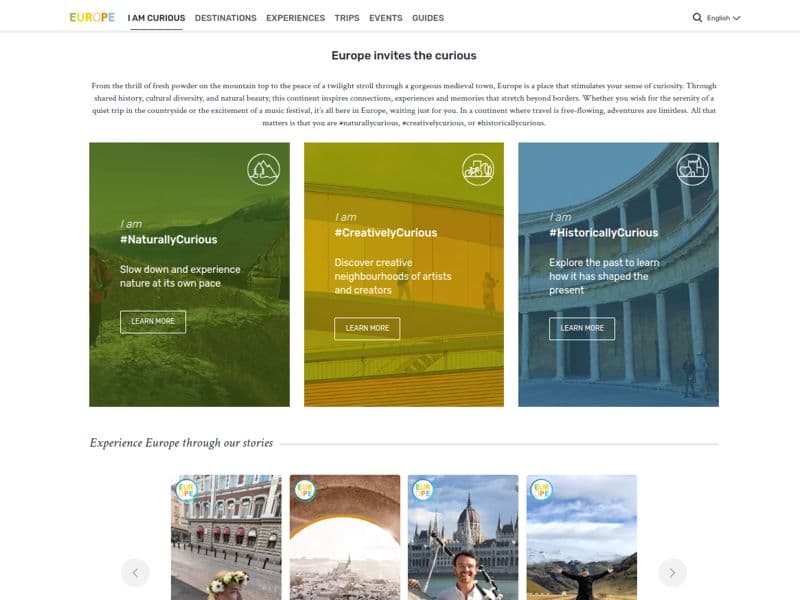
From 2016 through 2025, we led the technical evolution of the Visit Europe portal, helping transform it into a sophisticated digital platform that serves millions of travelers and tourism stakeholders across the globe.
Our role encompassed development and long-term maintenance, focusing on creating a scalable, maintainable, and high-performance solution that could handle complex content relationships and dynamic user interactions.
Technical Challenges
Complex Content Management
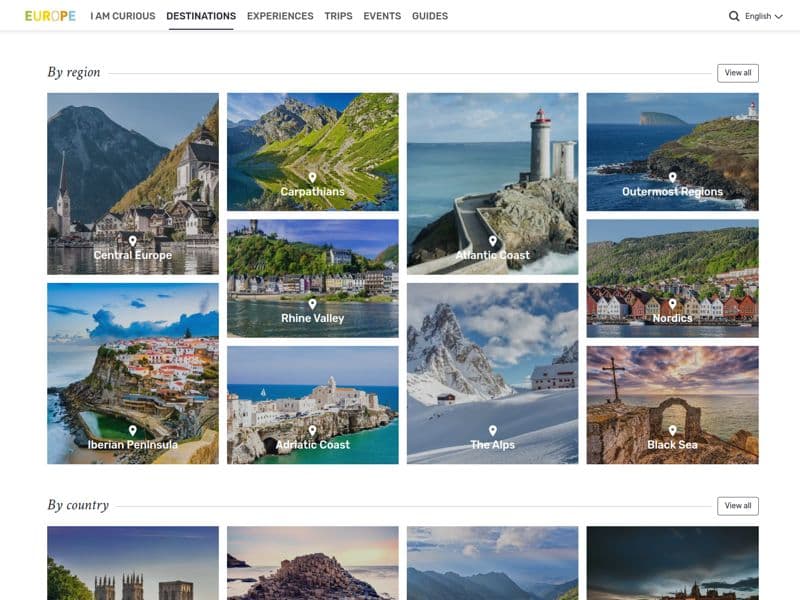
Our flexible multi-language system makes it easy to manage all kinds of content - everything from destinations to travel experiences and seasonal campaigns. The result was a powerful yet user-friendly platform that helps content teams across Europe create and manage their work effortlessly.
Interactive Mapping Solution
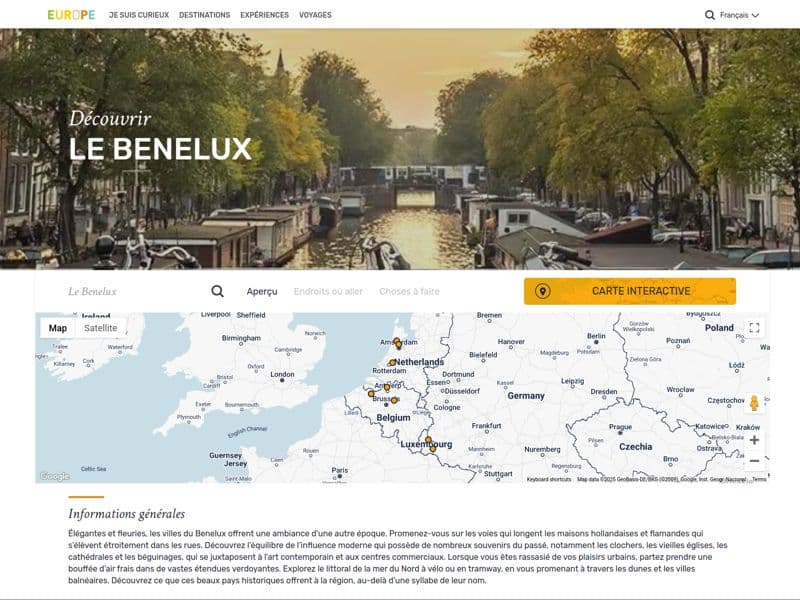
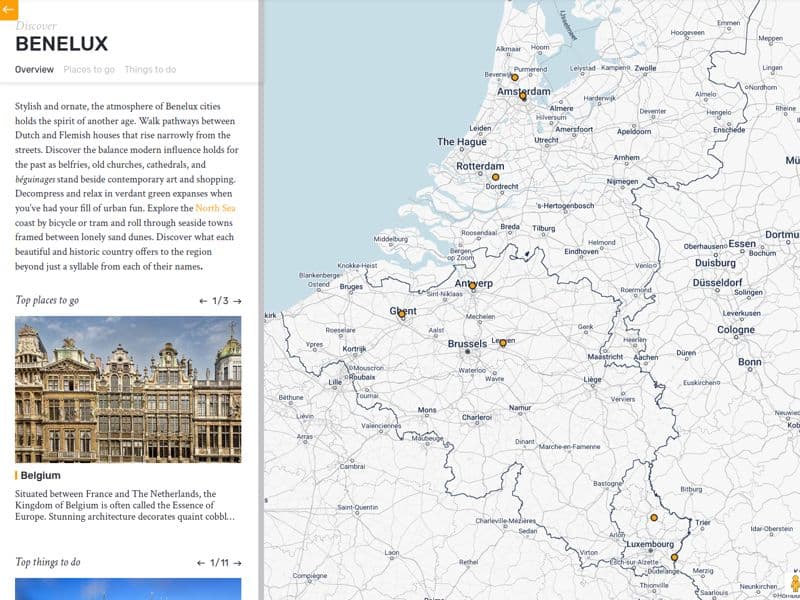
The heart of the platform is its dynamic map-based navigation system. The interface combines custom styling with interactive features, letting users explore destinations naturally. The system handles complex geographical data and route planning while keeping everything running smoothly.
Performance Optimization
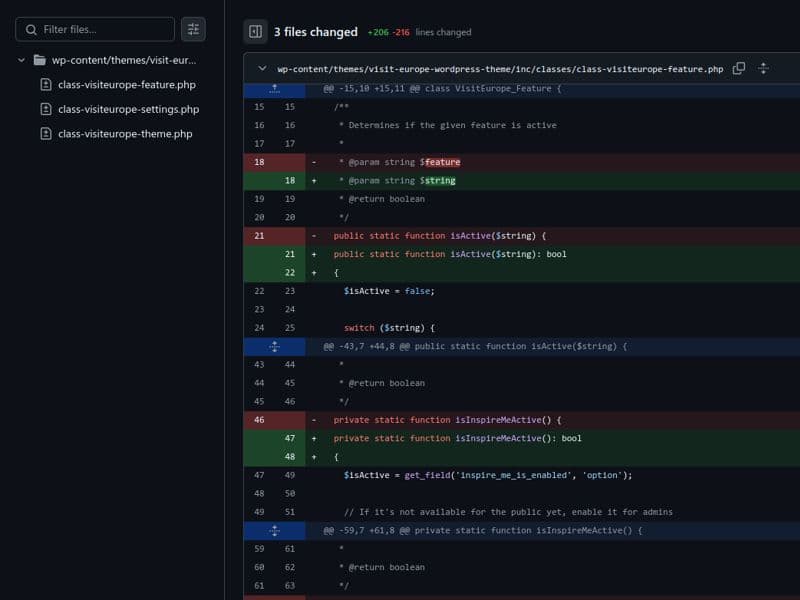
A major refactoring initiative in 2023/2024 revolutionized site performance across all regions. Strategic caching mechanisms, streamlined database queries, and a custom image optimization pipeline now deliver lightning-fast content worldwide.
Tourism Data Integration
The platform orchestrates data from diverse tourism partners and third-party APIs in real-time. Robust data pipelines with sophisticated failover systems ensure seamless content delivery, from social media streams to custom partner feeds.
Technical Solutions
Advanced Content Structure
We extensively utilized Advanced Custom Fields (ACF) Pro to create sophisticated content structures. This enabled us to build complex relationships between different content types, from destinations and experiences to thematic routes and seasonal campaigns. The solution provided content editors with an intuitive interface while maintaining data integrity and relationships.
Image Optimization Pipeline
We implemented a comprehensive image optimization solution that automatically generates and serves WebP and AVIF formats for all uploaded images. This system includes dynamic image resizing, lazy loading, and automatic format selection based on browser support, significantly improving page load times and user experience.
Multilingual Support
The platform supports content in multiple languages, with a sophisticated translation management system that maintains content relationships across different language versions. This includes handling of language-specific media assets and maintaining consistent URL structures across all supported languages.
Development Process

Iterative Development Approach
We adopted an iterative development process with two-week sprints, allowing for regular feedback and adjustments. Each sprint included planning, development, testing, and deployment phases, with continuous integration ensuring code quality and preventing regression issues.
Long-Term Maintenance
Our long-term maintenance work included updating WordPress core, the theme, and plugins while protecting custom functionality. We monitored performance and security throughout the engagement, implementing improvements and optimizations as requirements evolved.
Accessibility Improvements
Throughout development, we maintained a strong focus on accessibility, following WCAG 2.1 guidelines. This included implementing proper ARIA labels, ensuring keyboard navigation, and maintaining appropriate color contrast ratios.
Key Learnings
Throughout our 2016–2025 partnership with the European Travel Commission, we gained invaluable insights into managing and evolving large-scale tourism platforms. Building flexible content structures proved essential as the platform grew from a simple destination showcase to a comprehensive tourism portal featuring interactive maps, themed routes, travel planning tools, and seasonal campaigns.
The development of custom taxonomies and content relationships using ACF Pro enabled us to handle increasingly complex requirements, from multi-country itineraries to sophisticated filtering systems. This flexibility allowed us to seamlessly integrate new features like the Experience Creator tool and dynamic travel recommendations without rebuilding existing functionality.
Our focus on performance optimization yielded significant results, with the automated WebP and AVIF generation pipeline reducing image load times by 60%. The implementation of regional CDNs and advanced caching strategies improved site speed across different geographical locations, particularly beneficial for our growing Asian market.
The successful implementation of the multi-language content management system, supporting over 6 languages with market-specific content variations, demonstrated the importance of planning for internationalization from the start. This foundation made it possible to efficiently expand into new markets while maintaining content quality and site performance.